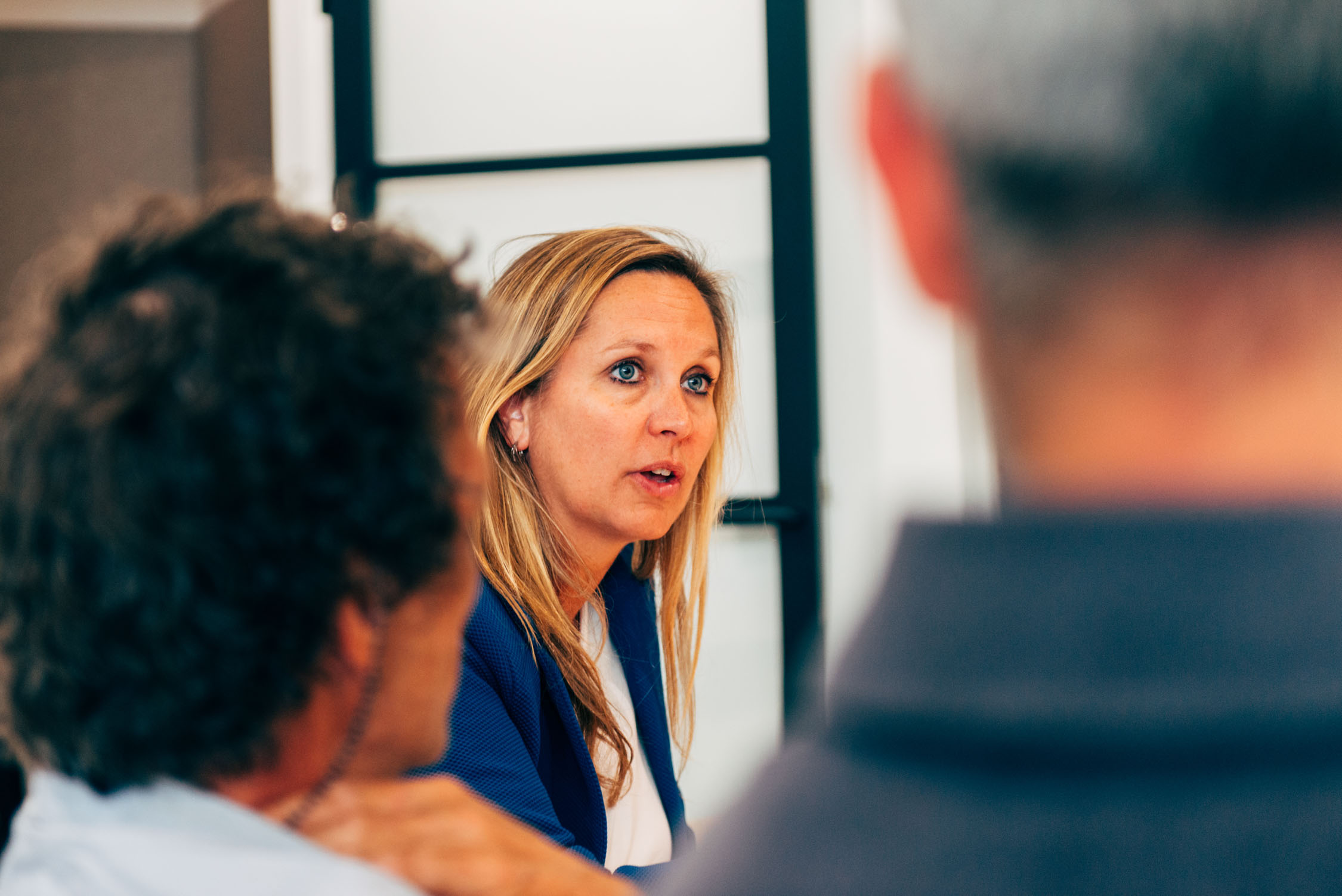
“Bij ons gaat het vooral over wat er niet goed gaat."
Komt je dat bekend voor?
De werkdruk is hoog. Een collega reageert kortaf.
Voor je het weet gaat het gesprek vooral over wat er misgaat, wat niet werkt of wat beter had gekund.
Dat is heel begrijpelijk. Ons brein is van nature geneigd om problemen sneller op te merken dan de dingen die goed gaan.
Maar wanneer klagen de norm wordt, kan dat invloed hebben op de sfeer, motivatie en veerkracht binnen een team.
Onderzoek naar dankbaarheidsinterventies op de werkvloer laat zien dat eenvoudige oefeningen, zoals regelmatig stilstaan bij waar je dankbaar voor bent, kunnen bijdragen aan het verminderen van stress. Door bewust aandacht te geven aan wat wél goed gaat, kun je je emotionele veerkracht versterken (Komase et al., 2021).
Niet door problemen te negeren.
Maar door je brein te trainen om ook positieve signalen bewust op te merken.
Begin met een eenvoudige dankbaarheidsoefening.
Neem aan het einde van je werkdag twee minuten de tijd om de volgende drie vragen te beantwoorden:
Bij Moovs kijken we vanuit vier perspectieven naar vitaliteit: fysieke vitaliteit, mentale helderheid, emotionele veerkracht en betekenisvolle, duurzame inzetbaarheid.
Dankbaarheid valt binnen emotionele veerkracht: hoe blijf je, ook wanneer het druk of uitdagend is, in balans, bewust van jezelf en op een positieve manier betrokken bij je werk?
Ben je benieuwd hoe vitaliteit en welzijn een grotere rol kunnen spelen binnen jouw organisatie? Neem gerust contact met ons op voor een vrijblijvend gesprek.
Of download ons Vitaliteitswiel: een praktisch overzicht dat helpt om vanuit vier perspectieven breder naar vitaliteit te kijken. Elk perspectief biedt concrete handvatten die eenvoudig kunnen worden vertaald naar kleine, praktische acties op de werkvloer.
Komase, Y., Watanabe, K., Imamura, K., & Kawakami, N. (2021). Effects of gratitude intervention on mental health and well-being among workers: A systematic review. Journal of Occupational Health, 63(1), e12290. https://doi.org/10.1002/1348-9585.12290

Jij zet de eerste stap, wij inspireren de volgende.
Group Moovs versterkt organisaties met innovatieve leeroplossingen, leiderschapsontwikkeling, coaching en meeslepende trainingservaringen. We zijn gespecialiseerd in leiderschap, menselijk gedrag en meetbare leerimpact, zodat teams kunnen floreren in een snel veranderende wereld.